 Skip to content
When England beat Spain 3-2 in Madrid, Thomas Tuchel endured a final half-hour that felt like three hours of survival. The German manager watched his ten-man side absorb 19 shots during a furious siege at the Riyadh Air Metropolitano. Yet this time, the collapse never came.
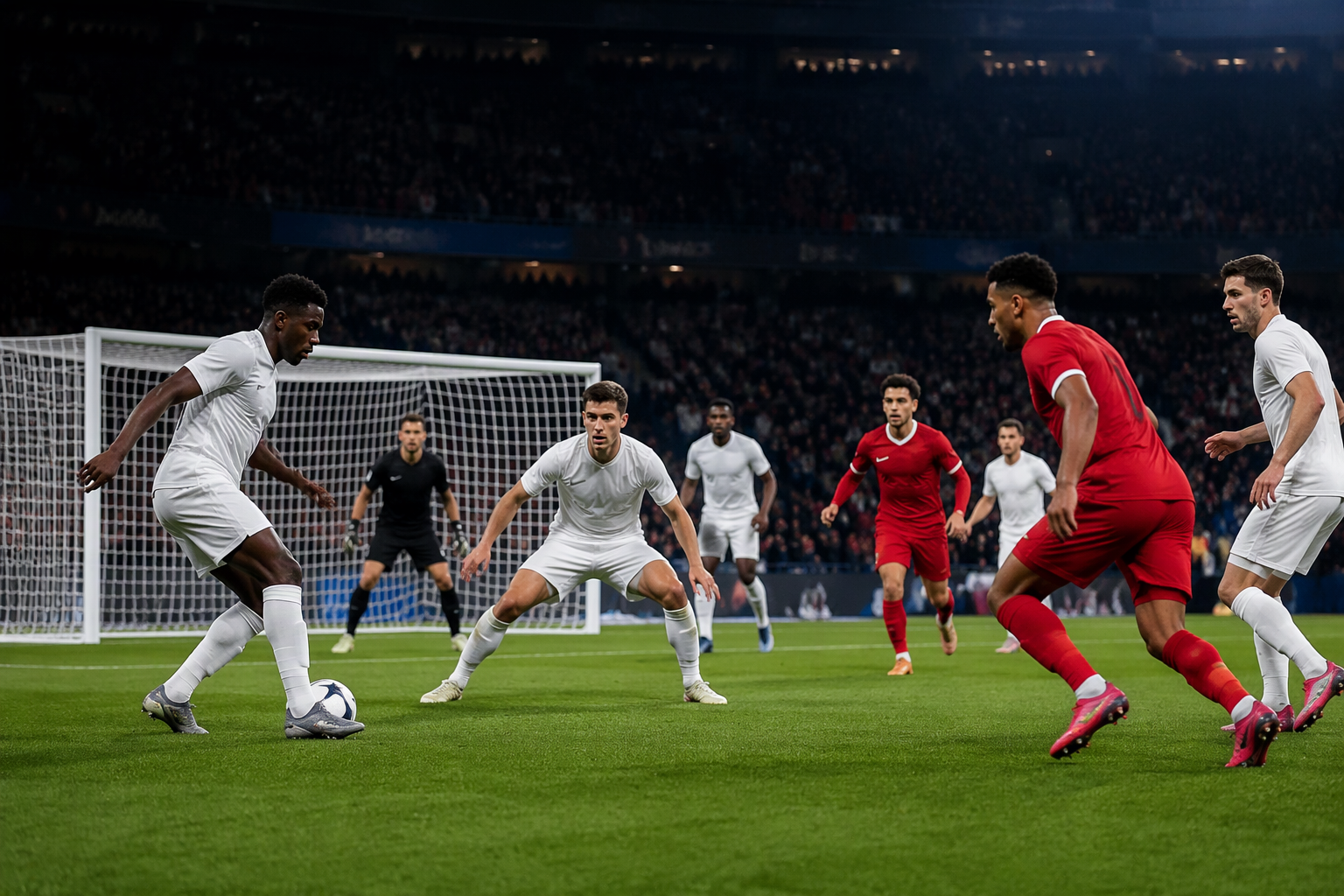
The victory sends England into the knockout phase as group winners, but it matters far more for their collective psyche. Tuchel’s side had developed a toxic habit of folding whenever opponents applied pressure late in major games. By holding on against the European champions, England finally proved they can suffer and still cross the finish line.
Also read: Spain vs England: Trafford and Kane seal wild Madrid win
The contrast with recent tournament heartbreaks could not be sharper. England led Argentina in Atlanta during the World Cup semi-final with eleven men on the pitch, only to collapse late. In Madrid, they lost a player, conceded two quick goals, and still walked away with the points.
How England beat Spain with sixty minutes of perfection
Before England beat Spain to the group title, they had to craft the sharpest attacking spell of Tuchel’s tenure. Harry Kane broke the deadlock early, setting the tone with clinical finishing. Ezri Konsa doubled the advantage from a set piece, before Ben White stunned the stadium with a third.
England controlled the pace and dictated every passage of play. Their passing was crisp, and their pressing disrupted Spain’s rhythm completely. But the entire contest flipped on its head just after the hour mark.
Midfielder Elliot Anderson brought down Lamine Yamal inside the penalty area in the 63rd minute. The referee dismissed Anderson with a straight red card, and Mikel Oyarzabal converted the spot-kick. Moments later, Nico Williams scored Spain’s second, igniting the home support and initiating a furious siege.
Tuchel later admitted the penalty and dismissal combined to transform the evening into a nightmare assignment.
“Half an hour feels like two hours against a team like this [with 10 men]. That’s the way it is. Without the red card we were clear winners.”
Why Tuchel altered his defensive substitution blueprint
Watching Spain swarm forward, fans wondered if Tuchel would repeat his previous tournament blunders. Against Mexico at the World Cup, Jarell Quansah was sent off while England led 2-1. Tuchel brought on three central defenders, scraping a 3-2 win behind Dan Burn’s heroics.
Nine days later against Argentina, Tuchel repeated that exact pattern. England led 1-0 through Anthony Gordon, but Konsa replaced him in the 72nd minute. Two more defenders arrived soon after, inviting Lionel Messi forward until Argentina struck twice.
In Madrid, Tuchel took a completely different approach. He did not rush to make immediate changes after Anderson walked off. Instead, the manager waited a full 15 minutes before altering his lineup.
Myles Lewis-Skelly replaced Kane after 78 minutes to restore midfield legs. Five minutes later, Tuchel brought on striker Dominic Calvert-Lewin rather than another pure defender. Jude Bellingham came off after 83 minutes of tireless running, giving England fresh legs to fight back.
What the numbers say about how England beat Spain
The post-match data shows that England faced far greater danger here than they did against Argentina. Spain generated an expected goals value of 2.53 across the final 30 minutes. The hosts fired 19 shots, hitting the target seven times as they pinned England deep.
Against Argentina, England had faced only ten shots and an expected goals total of 1.41. Yet Argentina found two goals against eleven men, whereas Spain could only manage one against ten. England completed only 61 passes in those final 30 minutes, recording a 64% passing accuracy.
The contrast with England’s standard control is stark. During Thursday’s 2-1 victory over Croatia, England attempted 557 passes with an 89% completion rate. Even in their earlier Wembley meeting with Spain, England completed 176 passes in the final half-hour.
England surrendered a 2-1 half-time lead at Wembley despite facing just five shots late on. In Madrid, they absorbed almost four times as many attempts, yet their structure held firm.
How James Trafford and the Madrid huddle saved the points
Tactics explain part of the turnaround, but team psychology did the rest. Immediately after Oyarzabal scored the penalty, England’s outfield players formed a tight huddle near the centre circle. Tuchel deliberately stepped back, allowing his senior leaders to organize themselves.
White explained after the whistle that the huddle was about maintaining composure under pressure. Former defender Matt Upson argued that the trauma of the red card actually galvanised the squad. Instead of splintering, the players embraced the suffering required to survive.
Goalkeeper James Trafford delivered the individual performance of his international career to preserve the lead. The young keeper registered six saves overall, with four arriving during the closing 12 minutes. His decisive intervention came in stoppage time, pulling off a breathtaking double save against Fermin Lopez and Yamal.
The result meant England beat Spain in their own backyard to seal first place in the group. England now await the Nations League quarter-final draw in November to see who they face next summer.
Source: BBC Sport


