 Skip to content
A stray live microphone accidentally caught the world number six calling an opponent a diva, but the Jessica Pegula hot mic incident was far from a disaster for women’s tennis executives. WTA chief Valerie Camillo publicly apologised to the American star while admitting that unscripted tension actually fuels fan engagement.
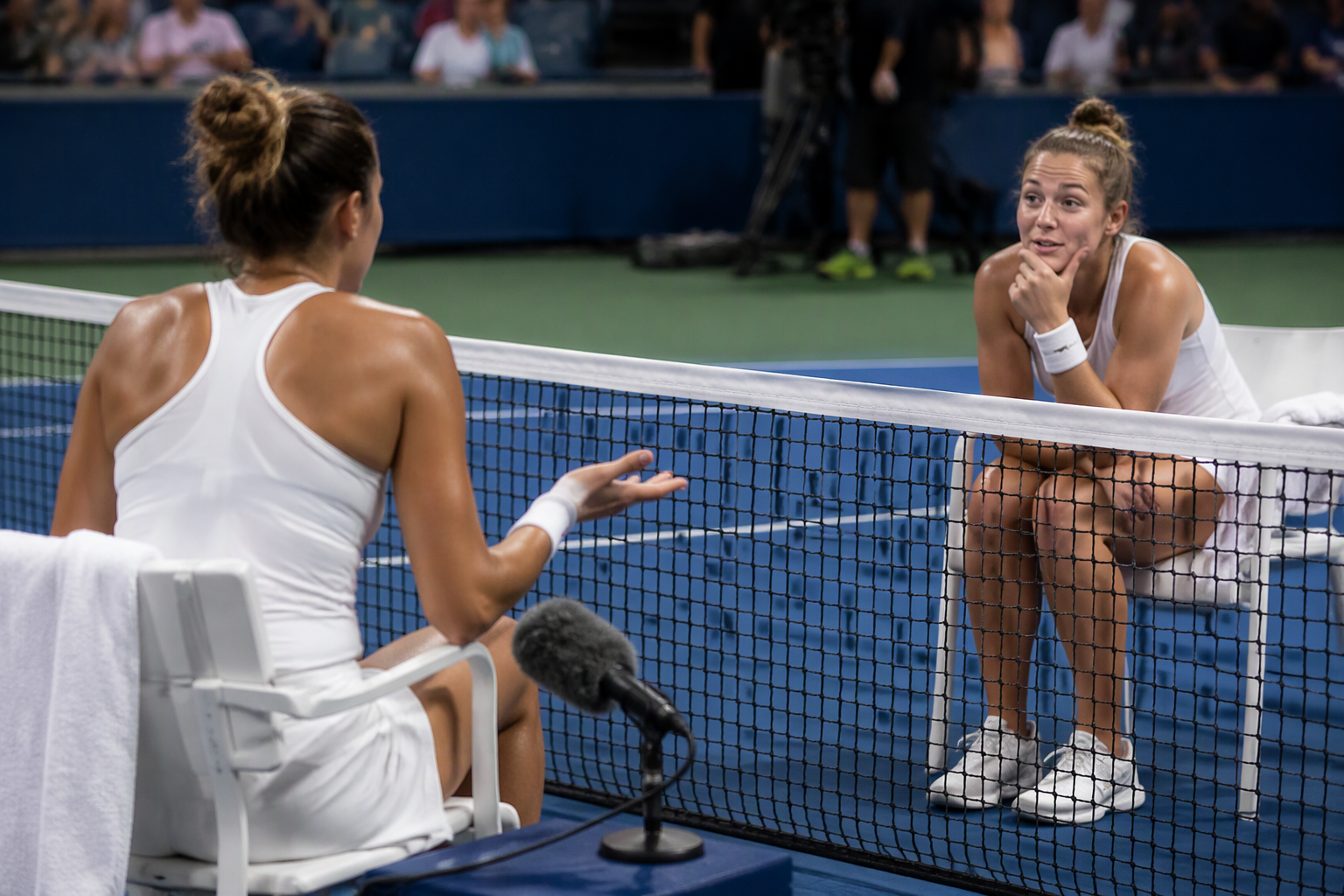
Pegula was venting to her coach Mark Knowles during an Indian Wells practice court session at the WTA Finals. The tour streamed ambient court noise live on YouTube without warning players that high-sensitivity microphones picked up every word. During that practice, Pegula called 19-year-old Mirra Andreeva a “diva” and criticised Andreeva’s coach Conchita Martinez for tolerating the teenager’s attitude.
Also read: Mirra Andreeva reaches WTA Finals decider with Pegula win
The accidental broadcast immediately blew up across social media platforms. Camillo contacted Pegula directly to apologise for the broadcast gaffe, calling the operational slip regrettable and unacceptable. Yet she acknowledged the blunt reality of modern sports entertainment in an interview with Jonathan Overend.
“It created a viral moment. It created a lot of dialogue. But that’s not intentional and not something you should expect to see us doing in the future.”
Why Camillo welcomes Jessica Pegula hot mic drama
Camillo cut her teeth in North American men’s leagues before taking the top job at the tour. She spent years working in Major League Baseball and the NBA, where sharp verbal sparring routinely drives television ratings and fan debate.
She stressed that tour staff never manufactured the leak to chase quick clicks. Still, she refused to pretend that an authentic flashpoint hurts commercial interest in the sport.
“I wish that we were so crafty and strategic but we can’t put ourselves in any situation where we put our athletes at risk,” Camillo said. “What Jess said is competitive banter. I don’t think there was anything particularly salacious in it. But having mics lying around that aren’t being properly managed is not how the WTA expects to execute and operate.”
The controversy gave their subsequent showdown an electric backdrop. Fans tuned in to see whether bad blood would spill over between the baselines.
“A little drama isn’t bad for ticket sales,” Camillo noted. “It’s not bad for viewership. It’s not bad for commentary. That’s just a reality.”
How Andreeva answered the Jessica Pegula hot mic comments
Andreeva never blinked when reporters asked about the leaked practice clip. Instead of trading verbal jabs through the press, she laughed off the insult and delivered her response with a racket in hand.
The teenager dismantled Pegula in their semi-final match, securing a clean 6-3 6-4 win under the desert sun. She then closed out an unforgettable week in California by defeating Elina Svitolina to lift the trophy at Indian Wells.
Camillo emphasised that protecting players remains the organisation’s primary duty. Even so, she believes tennis competitors must decide how much personality they want to share publicly. Giving players the freedom to speak their minds can help them turn competitive friction into personal brand growth.
Mounting cash pressures behind the Jessica Pegula hot mic storm
The broadcast controversy arrived while the tour battles serious economic headwinds. The WTA projected operating losses of £17.3m ($23m) for 2026, with cash reserves dwindling toward roughly £11.3m by year’s end.
Much of that financial strain stems from relocating the prestigious season-ending event on short notice. The tournament originally belonged to Riyadh, Saudi Arabia, through a multi-year deal with the Saudi Tennis Federation featuring record purse payouts. Geopolitical tensions between Iran and the United States disrupted those arrangements in July, forcing administrators to scramble and stage the competition in California instead.
Camillo wants all combined 1000-level tournaments to deliver equal prize money with the men’s tour by 2027. Meeting that ambitious benchmark demands aggressive revenue growth through sponsorship expansion, data licensing and in-house media operations.
Protecting players as data deals expand
Commercial streaming and betting partnerships remain a major revenue source for the organisation. The governing body sells match feeds and real-time court data to betting operators worldwide, but commercial exposure brings real hazards for athletes.
British player Jodie Burrage recently exposed vile online harassment after an opening-round loss in India. Burrage, playing her first tour match since Wimbledon, shared venomous messages and death threats sent directly to her Instagram account.
Camillo argued that official betting partnerships give administrators greater oversight than an unregulated black market would allow. Without structured industry relationships, tennis data distribution risks descending into an unpoliced free-for-all.
The tour now turns its attention to Italy, where the men’s ATP Finals in Turin closes out the 2024 elite singles calendar.
Source: Sky Sports


