Skip to content
A 12-match Jesus Owono ban was confirmed on Friday by Spanish football authorities, ten days after an on-field collision led to the death of Tenerife striker Jesus de Miguel.
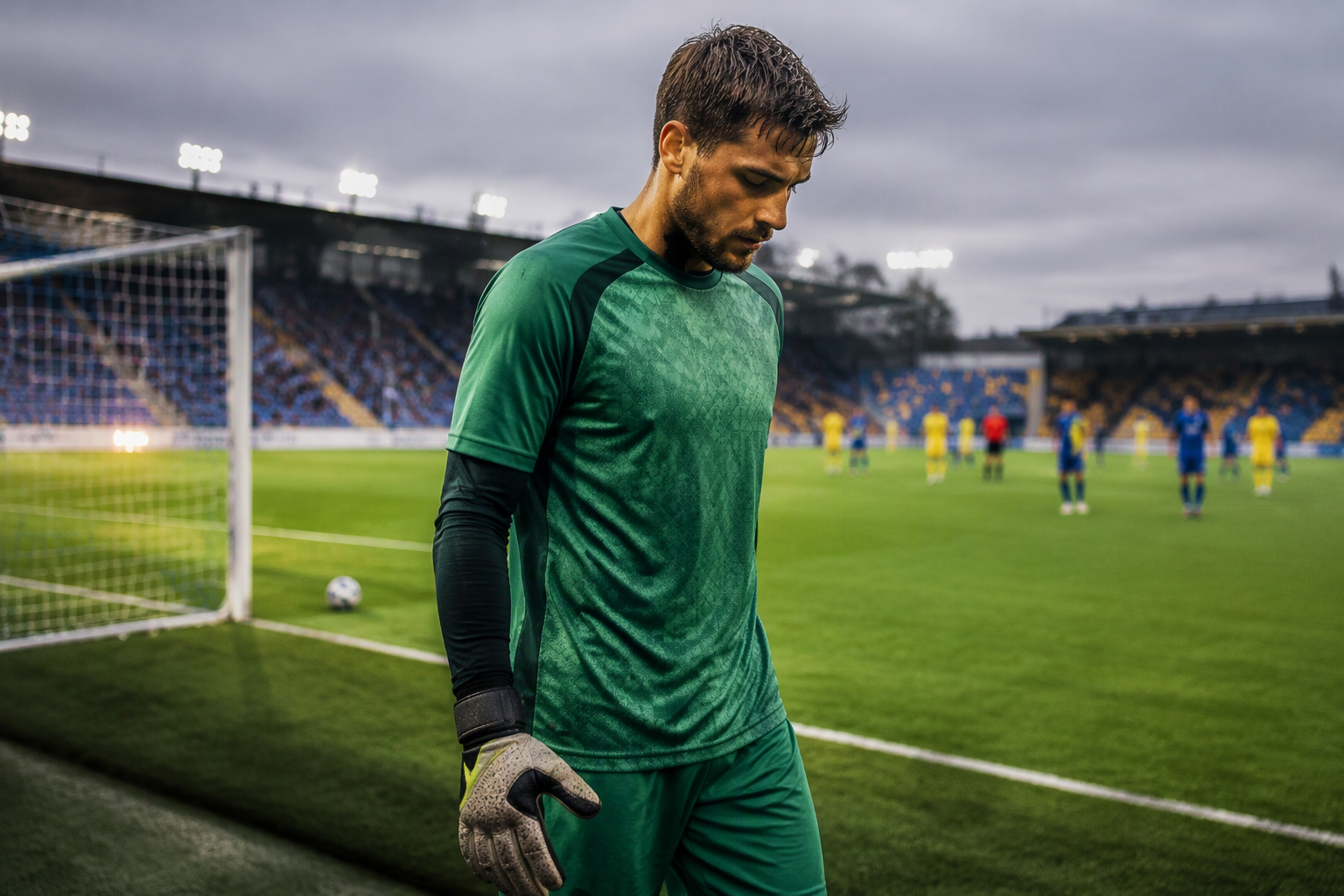
The Spanish soccer federation acted after reviewing the tragic incident from 2 November. De Miguel died in the hospital a day after the collision, sending shockwaves across the sport in Spain and abroad.
Also read: Harry Kane England record: Striker seals win over Croatia
For Andorra and their 24-year-old goalkeeper, the ruling settles the sporting penalty for an incident that devastated two clubs and left a family grieving.
Why federation officials settled on a 12-match Jesus Owono ban
The Spanish soccer federation’s disciplinary committee delivered its verdict on Friday following an assessment of the match report and video footage. Officials determined that Owono acted with “excessive force” when he charged out of his penalty area.
The referee had already shown the Andorra goalkeeper a direct red card on the pitch following the clash. Yet the disciplinary committee felt the severity of the challenge warranted a suspension extending across 12 matches.
Disciplinary bosses rarely issue bans of this length in Spanish domestic football. But the committee concluded that the goalkeeper’s reckless rush far from his goal line put an opponent in extreme physical peril.
The decision enforces the Jesus Owono ban immediately across Spanish domestic competition. It removes the shot-stopper from selection for nearly three months of league fixtures.
The midfield collision that took Jesus de Miguel’s life
The fatal moment occurred late in the contest held in Tenerife on 2 November. Tenerife striker Jesus de Miguel tracked a high ball dropping near the center circle as his team pushed forward.
Owono sprinted out of his box to contest possession, colliding directly with the forward. The impact struck the 30-year-old forward squarely in the chest.
De Miguel collapsed to the turf and suffered cardiac arrest moments after the blow. Paramedics rushed to treat him on the pitch before transferring him to a nearby hospital.
Medical staff fought to stabilize the attacker throughout the night. Despite their efforts, De Miguel died the following day.
The tragedy prompted an outpouring of sorrow across Spanish football. Owono quickly released an emotional statement through his club to share his grief and reach out to the family.
“These are the most difficult days of my life,” Owono said. “I’m struggling to find the words and finding it very difficult to process anything that has happened.”
“I feel enormous pain at the loss of Jesus,” the goalkeeper added. “I think of him, his family, and all the people who loved him. Right now, honestly, I can’t think of anything other than Jesus and the pain we are experiencing.”
Police scrutiny beyond the Jesus Owono ban
While the sporting penalty is now set, local authorities launched their own legal checks following the fatality. Spanish police opened an inquiry into possible involuntary manslaughter.
Under Spanish law, any death resulting from non-natural causes or sudden accidents requires an automatic judicial inquiry. Investigators must gather reports from match officials, medical personnel, and witnesses to establish the exact sequence of events.
Even so, state prosecutors indicated that formal criminal proceedings against the goalkeeper remain unlikely. Sports collisions that result in accidental trauma rarely meet the legal threshold for criminal negligence under the national penal code.
The administrative Jesus Owono ban will therefore stand as the primary punishment resulting from the clash. Legal authorities expect to conclude their procedural review once they finalize the autopsy files and police depositions.
What Andorra and Equatorial Guinea face next
The fallout has already altered Owono’s playing calendar well beyond his club duties. Equatorial Guinea officials chose to omit him from their squad for the ongoing international break.
Owono has served as Equatorial Guinea’s first-choice goalkeeper since his teenage years. He started in goal during the nation’s past three Africa Cup of Nations tournaments, but selectors stepped back to give him time away from competition.
Back at his club, Andorra coach Carles Manso announced that the squad will not push the goalkeeper into action. Manso stressed that Owono’s mental state matters far more than any fixture list.
“We will give him the space to feel completely free to decide whether, and when, he might want to return.”
Can anyone truly expect an athlete to clear their head quickly after an incident this painful? Manso made it clear the club will let the player dictate the pace of his recovery.
The domestic Jesus Owono ban keeps the goalkeeper sidelined through winter fixtures, while police conclude their paperwork in Santa Cruz de Tenerife.
Source: Independent Sport