 Skip to content
The Las Vegas Grand Prix could turn into an outright nightmare for drivers if desert rain hits the cold circuit this week. Lando Norris sounded the alarm after looking at the forecast and reviewing how modern wet-weather rubber behaves in freezing temperatures. The McLaren driver warned that cars risk losing all grip on the icy asphalt, which would turn high-speed running into a genuine hazard.
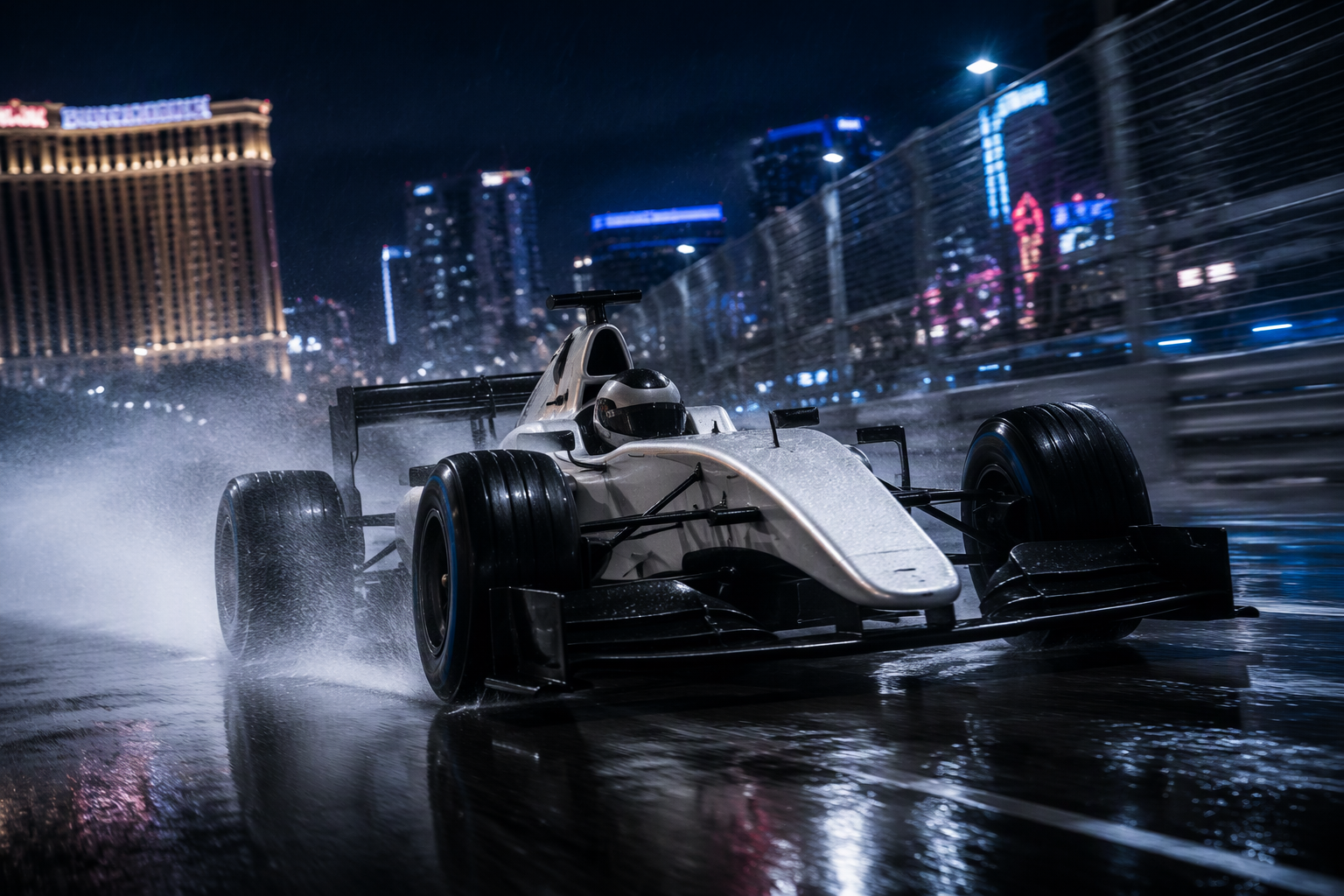
That warning changes the stakes for everyone heading into the race weekend. Formula 1 cars generate enormous speed, but that speed depends entirely on tire friction. If tires cannot reach their operating window, drivers become passengers inside their own cockpits.
Also read: Las Vegas Grand Prix BBC Coverage, Times and Stakes
Why the Las Vegas Grand Prix chills F1 tires
The core problem comes down to raw physics and track geometry. The 3.853-mile street circuit features long, sweeping straights where cold desert air rushes over the cars. Those long stretches cool the rubber down rapidly each lap.
Normal racing tracks have high-speed corners that push extreme lateral energy into the tires. That scrubbing force builds core temperature inside the compound and keeps grip alive. But this layout has very few high-load turns, so the tires never receive enough energy to stay warm.
When you combine long straights with chilly evening air, heat vanishes from the tread. The tires simply stay cold, and intermediate tires become useless under those conditions. Norris explained that the cars feel horrible on their grid laps whenever the rubber fails to warm up properly.
Norris fears intermediate tires on freezing asphalt
Norris did not hold back his concern when speaking to Motorsport.com about the track conditions. He called the prospect of a wet practice session “scary” because drivers cannot afford sudden traction loss at 200 mph. Intermediate tires usually clear standing water, but they cannot do their job if the compound remains frozen.
Norris pointed out that the most alarming moments occur when cars run in Vegas without any heat in the tread. “When the tyres get cold, it’s pretty nasty,” Norris warned. Drivers then slide across the surface rather than biting into the tarmac.
Without adequate heat, the car skids unpredictably over the painted street markings and public road asphalt. The McLaren contender made it clear that drivers desperately need a much better tire compound to survive a freezing desert night. A full wet race could turn completely chaotic without an immediate solution.
What Verstappen and Sainz want changed
Reigning world champion Max Verstappen backed Norris after experiencing the same rubber issues firsthand. The Red Bull driver, fresh off finishing second in Brazil, believes the usable tire window is far too narrow.
Verstappen explained that the tires perform fine when hot, but they transform into solid bricks in low temperatures. When the compound drops below its working threshold, drivers lose all feel through the steering wheel.
I think it’s mainly that the working range is a bit too small.
Verstappen wants suppliers and teams to figure out how to make wet tires function across mixed track temperatures. Williams driver Carlos Sainz agreed, arguing that the entire wet catalog needs an overhaul. Sainz stressed that the current level of wet and intermediate tires is not good enough for professional racing.
Rain forecast threatens the Las Vegas Grand Prix schedule
The schedule leaves very little margin for error as sessions run late into the night. Weather projections show a rain chance of over 50 percent for Thursday evening’s opening practice session. If those showers arrive, drivers must tackle the slick street circuit on tires they already distrust.
Running in damp conditions along the Strip could disrupt practice data and throw setup choices into disarray. Teams rely on early practice laps to dial in wing levels, mechanical balance, and ride heights. A washed-out session on cold tires would leave engineers guessing ahead of the main event.
The 50-lap Las Vegas Grand Prix is scheduled for Saturday, November 21, at 11 pm ET. Drivers will find out soon enough if the skies open when Thursday practice begins at 6:30 pm local time.
Source: Yahoo Sports


