 Skip to content
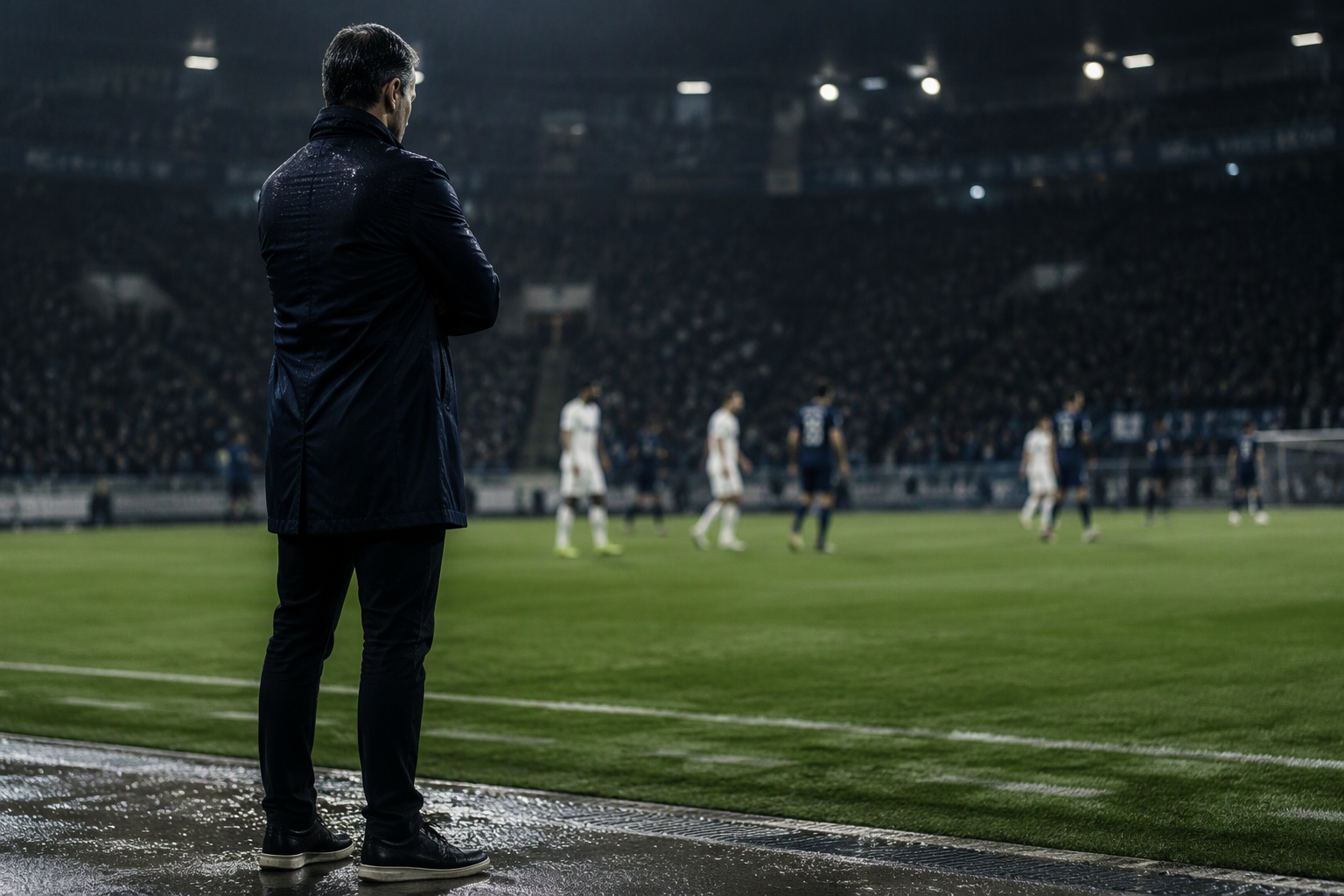
Sebastien Pocognoli watched his Scotland team collapse in St Gallen on Monday night, conceding twice in five second-half minutes to an understrength Swiss side with nothing at stake.
The demoralising 4-0 defeat brought a wretched conclusion to their Nations League campaign. Exactly 12 months after a famous 4-2 win against Denmark sealed World Cup qualification under Steve Clarke, Scottish football finds itself plunged into reverse.
Also read: England Nations League Win Fuels Euro 2028 Ambitions
Scotland needed a victory to retain an outside hope of a promotion play-off place. Instead, they folded against a youthful Switzerland lineup, leaving supporters furious and the manager already fighting for his reputation.
How Sebastien Pocognoli lost control in St Gallen
Switzerland were already confirmed as group winners and rested many regulars. Scotland, meanwhile, fielded their best available side with everything to fight for on the pitch.
The visitors started with bright moments, but disaster struck when Lewis Ferguson turned the ball into his own net. That miscue gave the Swiss a first-half lead they rarely looked like relinquishing.
Scotland still had the entire second half to stage a recovery. Yet they returned from the break utterly disjointed, conceding two quick strikes before completely losing their structure.
As it turned out, Slovenia won 3-0 against North Macedonia anyway, which extinguished any faint play-off hopes. Even so, the meek manner of Scotland’s second-half capitulation caused genuine alarm among travelling fans.
Tactical failure in the 3-4-3 setup
Sebastien Pocognoli reacted angrily before kickoff when a reporter questioned his tactical preferences. The Belgian wants Scotland to push high, dominate the ball and play on the front foot.
The reality on the pitch looks completely different. Scotland can neither break down opponents from open play nor protect their own backline when possession turns over.
The manager deployed Scott McTominay as an advanced playmaker alongside John McGinn in a 3-4-3 shape. But McTominay has looked completely anonymous in that role across his two outings under the new boss.
Steve Clarke faced tactical criticism towards the end of his tenure, especially during the World Cup. Yet Clarke’s teams regularly found a way to scrap when doubts mounted, an instinct this current group appears to lack.
Pocognoli has now managed six matches in charge of the national team. His only two victories came against lowly North Macedonia, leaving him without a single statement result to his name.
Robertson issues a warning to Sebastien Pocognoli
Andy Robertson reached a personal milestone on the night, but the captain had no interest in celebrating. His post-match reaction delivered a harsh assessment of where the squad stands right now.
“I don’t think you’ve got time in international football. Are they supporters that have travelled everywhere going to give us time? No. The people inside Hampden, are they going to give us time? No. Are the people outside Hampden that are going to be critical, and rightly so, are they going to give us time? No.”
Robertson understood the frustration of supporters who watched Scotland surrender without a fight. His blunt words revealed a dressing room aware that patience has already evaporated.
The Liverpool full-back pointed out that the squad now faces a blank calendar until March. That prolonged break prevents Sebastien Pocognoli from fixing structural flaws on the training pitch anytime soon.
Robertson stressed that international managers do not receive years of grace. When belief fractures this early into an appointment, recovery becomes an uphill task.
Euro 2028 qualifying draw poses severe threat
Scotland’s third-place finish in League B carries severe consequences for their future tournament ambitions. They will now sit in Pot 3 when the Euro 2028 qualifying draw takes place in early December.
That low seeding leaves them vulnerable to a brutal group. Scotland could easily land alongside European champions Spain and Sweden, where only two automatic qualifying spots exist.
Two safety-net places remain available for tournament co-hosts if they fail to qualify directly. But UEFA will hand those spots only to the co-hosts with the strongest qualifying records.
Scotland could easily end up hoping that England, Wales and the Republic of Ireland cruise through automatically to keep that safety net intact. If the Tartan Army lands in a five-team group, qualifiers will begin as early as March 2026.
Sebastien Pocognoli must now wait until that March international window to prove his system can function at this level.
Source: Independent Sport


