 Skip to content
World Cup hydration breaks were sold to fans as medical necessity, but television networks quickly turned those three-minute pauses into pure gold. Now Fifa has revealed it wants that lucrative model in place for the 2030 tournament. Tender documents sent to broadcasters include a provision permitting networks to sell commercials during in-game stoppages.
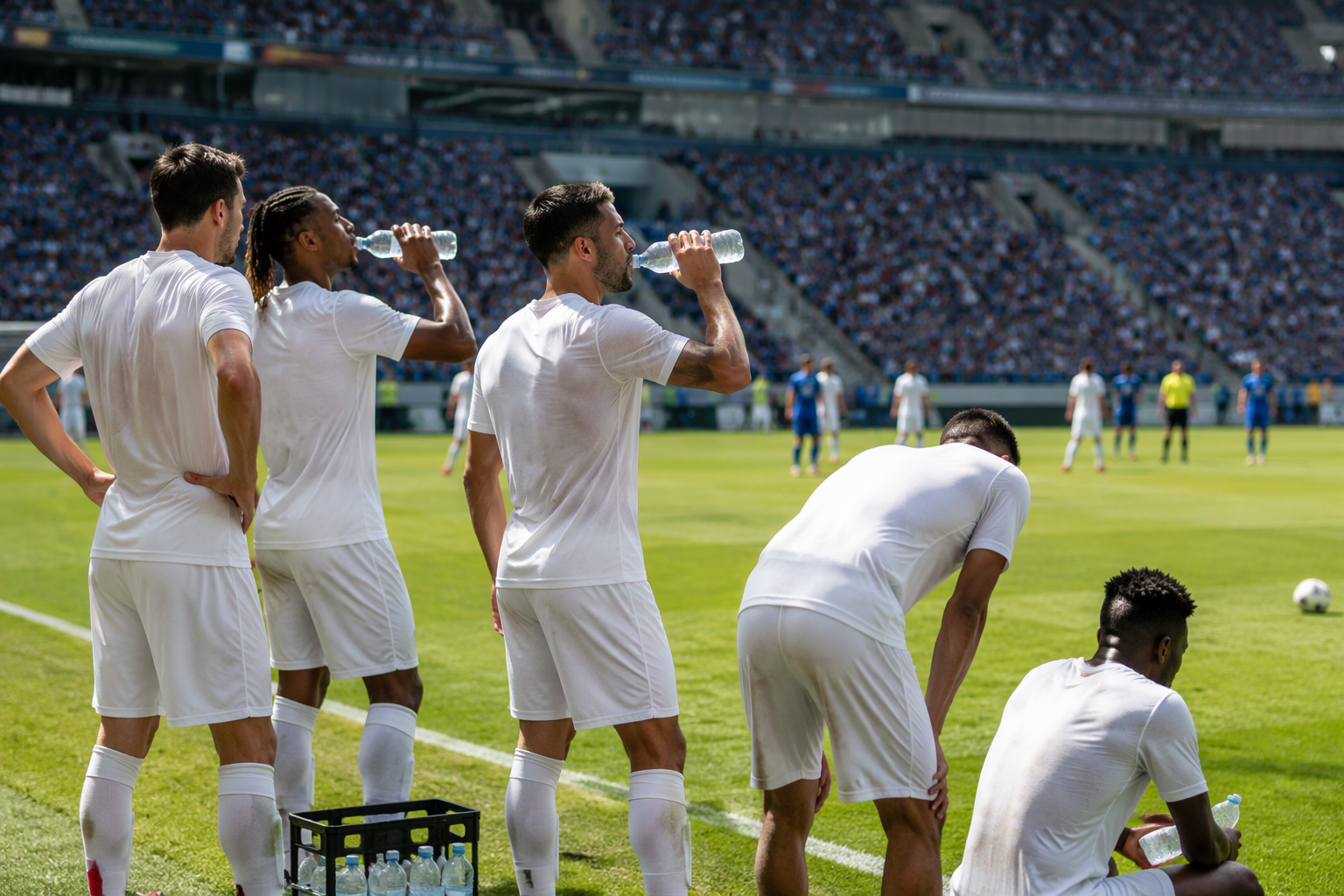
That subtle clause carries immense weight for anyone watching from the couch. It signals that mid-half television adverts may become a permanent fixture of international football. What began as emergency relief under blistering summer skies is turning into standard broadcast inventory.
Also read: William Saliba Return Gives Arteta Huge Arsenal Dilemma
Fifa insists it has not yet made a final decision on whether the stoppages will return for 2030. Yet football’s world governing body openly flagged the commercial benefits to prospective buyers. Broadcasters bidding on the upcoming rights now know those extra advertising windows are on the table.
Why World Cup hydration breaks mean billions
The financial incentive behind this provision is staggering. Broadcasters across North America saw first-hand how profitable pausing a match can be. US rights holders Fox Sports and Telemundo pocketed massive windfalls when pauses were mandated for all 104 matches at the 2026 tournament.
Those three-minute stoppages arrived midway through each half of every fixture. The Hollywood Reporter reported that each stoppage window generated between $2m and $9m in advert revenue. Industry estimates showed that Fox alone collected roughly $250m from those extra advert slots.
That single revenue stream transformed the balance sheet for the network. Fox hauled in an overall advertising yield of $835m from the tournament, according to media analyst Guideline. That total almost doubled the $485m rights fee Fox originally paid to Fifa.
Fifa did not pocket a direct share of that advert money during the tournament. But the governing body clearly noticed how much cash networks extracted from the clock. By baking World Cup hydration breaks into the new tenders, Fifa aims to drive up its own rights auction fees.
Welfare logic and World Cup hydration breaks
The push toward structured stoppages did not start as a boardroom pitch for ad revenue. It grew out of genuine concern for player welfare during intense summer heatwaves. Fifa previously relied on ad hoc cooling breaks when matches became dangerously hot.
European governing body Uefa sets a standard rule for cooling breaks during its competitions. Referees can halt play for 90 seconds up to three minutes if the pitchside temperature reaches 28C. That approach left the decision to match officials and local weather readings on matchday.
Everything changed after the 2025 Club World Cup in the United States. Oppressive heat forced officials to stop play in about 60% of all fixtures at that tournament. Fifa responded by ordering universal World Cup hydration breaks for every single match in 2026.
Fifa defended the blanket rule by arguing it protected tournament integrity. Officials wanted identical playing conditions for every team, regardless of venue. Yet the decision sparked controversy because 31 of the 104 matches took place in fully climate-controlled, indoor stadiums.
Stopping play inside an air-conditioned arena baffled purists, but it created uniform broadcast schedules. Networks gained guaranteed commercial time midway through every half of football. Fifa sources now claim the new tenders merely cover all potential options for tournament organizers.
Where the 2030 bidding battle stands
The 2030 World Cup presents a complex logistical map across three continents. Morocco, Spain and Portugal are the primary hosts, while three opening matches take place in Uruguay, Argentina and Paraguay. Temperatures will vary wildly from the Atlantic coast to North African cities.
Fifa has already begun locking down broadcast partners across several territories. Netflix secured the tournament broadcast package in Spain, and public broadcaster SBS retained rights in Australia. Still, all eyes are now on the massive US TV rights market.
US and Puerto Rico rights are expected to command between $1.5bn and $2bn at auction. Streaming giants like Netflix are bidding against traditional television networks to secure the package. The inclusion of commercial break windows gives bidders a clear way to recoup those record fees.
Who gets World Cup hydration breaks in 2030
Player health remains the official rationale for pausing matches, but application varies by tournament. Mandatory World Cup hydration breaks will not feature at next year’s Women’s World Cup in Brazil. Weather forecasters expect far cooler conditions across Brazilian cities than players faced in North America.
That omission shows Fifa still views mandatory stoppages as weather-dependent rather than a universal law of football. Commercial pressure, however, has a way of shaping the rules when billions of dollars in television rights hang in the balance. If US networks pay $2bn, they will want every commercial second they can get.
Networks face an immediate deadline to make their play. Broadcasters bidding for the US and Puerto Rico rights must submit their final offers this Thursday.
Source: Guardian Sport


