Skip to content
A 12-match Jesus Owono ban has been handed down after an on-field collision resulted in the death of Tenerife forward Jesus de Miguel. The FC Andorra goalkeeper received the maximum sporting penalty available from domestic authorities. De Miguel passed away in hospital the day after the collision took place.
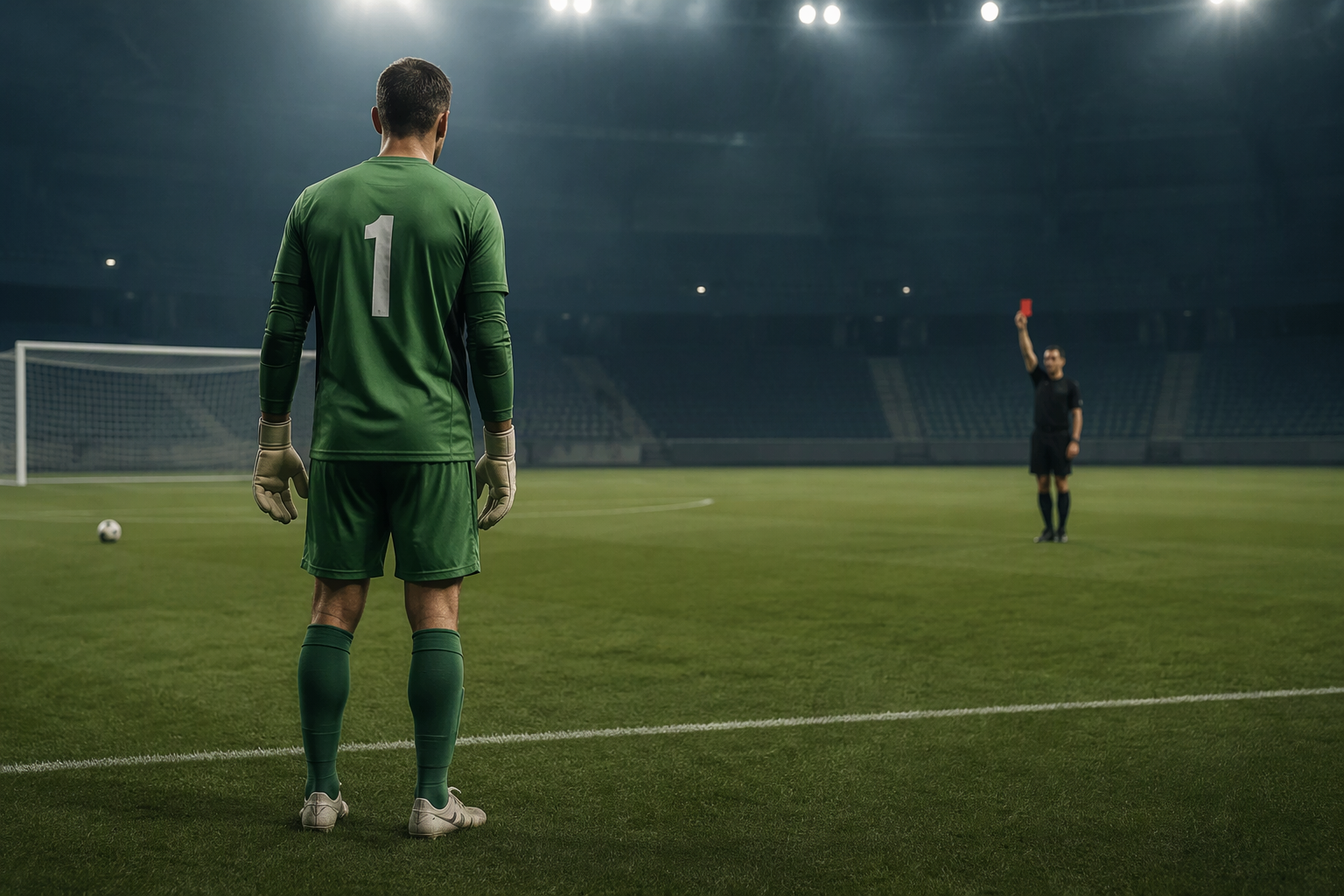
De Miguel suffered fatal injuries when Owono challenged for the ball late in the match. The ruling brings formal closure to the sporting investigation into the tragic incident. Still, the Jesus Owono ban reflects one of the darkest moments in modern Spanish football.
Also read: Jesus Owono ban: Andorra goalkeeper gets 12 matches
FC Andorra must now move forward without their first-choice goalkeeper for a substantial part of their season. The Spanish Football Federation acted decisively after reviewing evidence from the Segunda Division fixture. Their disciplinary committee determined that the severity of the challenge warranted the strictest possible punishment.
The referee report behind the Jesus Owono ban
The incident occurred late in the contest earlier this month. Match officials sent off the 25-year-old goalkeeper after he collided with De Miguel during a contested ball. The Equatorial Guinea international struck the forward with tremendous force in the chest.
Disciplinary officials relied entirely on the written findings submitted by the match referee. The referee reported that Owono violently struck his opponent with his leg while using excessive force. His report specified that the ball remained in play when the violent contact happened.
The disciplinary committee explained their reasoning in an official statement. The committee noted that proceedings must rest on the facts expressly recorded in the referee’s match log. Because the fatal outcome was public knowledge, the federation ruled that the full Jesus Owono ban of 12 matches was justified.
The 12-game suspension stands as the absolute limit for this type of red-card infraction under federation rules.
Why the Spanish federation preserved the 2-2 scoreline
The collision took place seven minutes into stoppage time, forcing an immediate halt to play. Paramedics rushed onto the pitch to treat De Miguel as players from both teams stood in shock. The referee blew for the abandonment of the game right after the collision.
The match between Andorra and Tenerife was deadlocked after a hard-fought contest in the Segunda Division. While the Jesus Owono ban settled the individual player punishment, administrators had to resolve the final result. The governing body decided that the 2-2 scoreline at the time of the stoppage will stand permanently.
Officials determined that making the teams replay the remaining minutes would be completely inappropriate. Both clubs and match officials recognized immediately that football could not continue in such circumstances.
“This avoids having to resume play from the precise moment at which the tragic incident occurred-the most respectful course of action, given the extraordinary and tragic circumstances of this case,”
Carles Manso speaks on Owono’s football future
The disciplinary ruling creates huge uncertainty around Owono’s playing career. Andorra manager Carles Manso spoke on Thursday and revealed that the keeper has not decided if he will ever play again. Manso stressed that football remains secondary while Owono deals with the grief of what happened.
The psychological toll of De Miguel’s death has left the young goalkeeper deeply shaken. Owono had earlier broken his silence to express his personal devastation over the accident. In an official statement, he conveyed his enormous pain regarding De Miguel’s passing.
He also made clear that he will face whatever comes with the utmost respect. Andorra have rallied behind their player while respecting his need for space and privacy. Yet his return to team training remains completely on hold for now.
His teammates continue their league schedule while he processes the emotional aftermath.
Police inquiry follows the Jesus Owono ban
The sporting Jesus Owono ban settles matters on the pitch, but civil authorities must carry out their own duties. Spanish police have launched an active investigation into possible involuntary manslaughter. Standard practice under Spanish law requires a formal police inquiry whenever an accidental death occurs in such circumstances.
Legal experts note that Spanish authorities must examine all fatal sports collisions under criminal statutes. Officers will review television broadcast footage and examine medical reports compiled after the match. Investigators must establish whether criminal negligence played any role in the fatal impact.
This process moves at its own pace through the Spanish judicial system. For now, both clubs continue to mourn the loss of De Miguel as Tenerife supporters pay tribute to their forward. Investigators will present their preliminary findings to local magistrates in the coming weeks to determine if criminal charges are warranted.
Source: Sky Sports