Skip to content
Fans watching the Rugby League World Cup in Sydney saw packed stadiums and booming television figures, while supporters in Leeds and Wigan could barely find a broadcast.
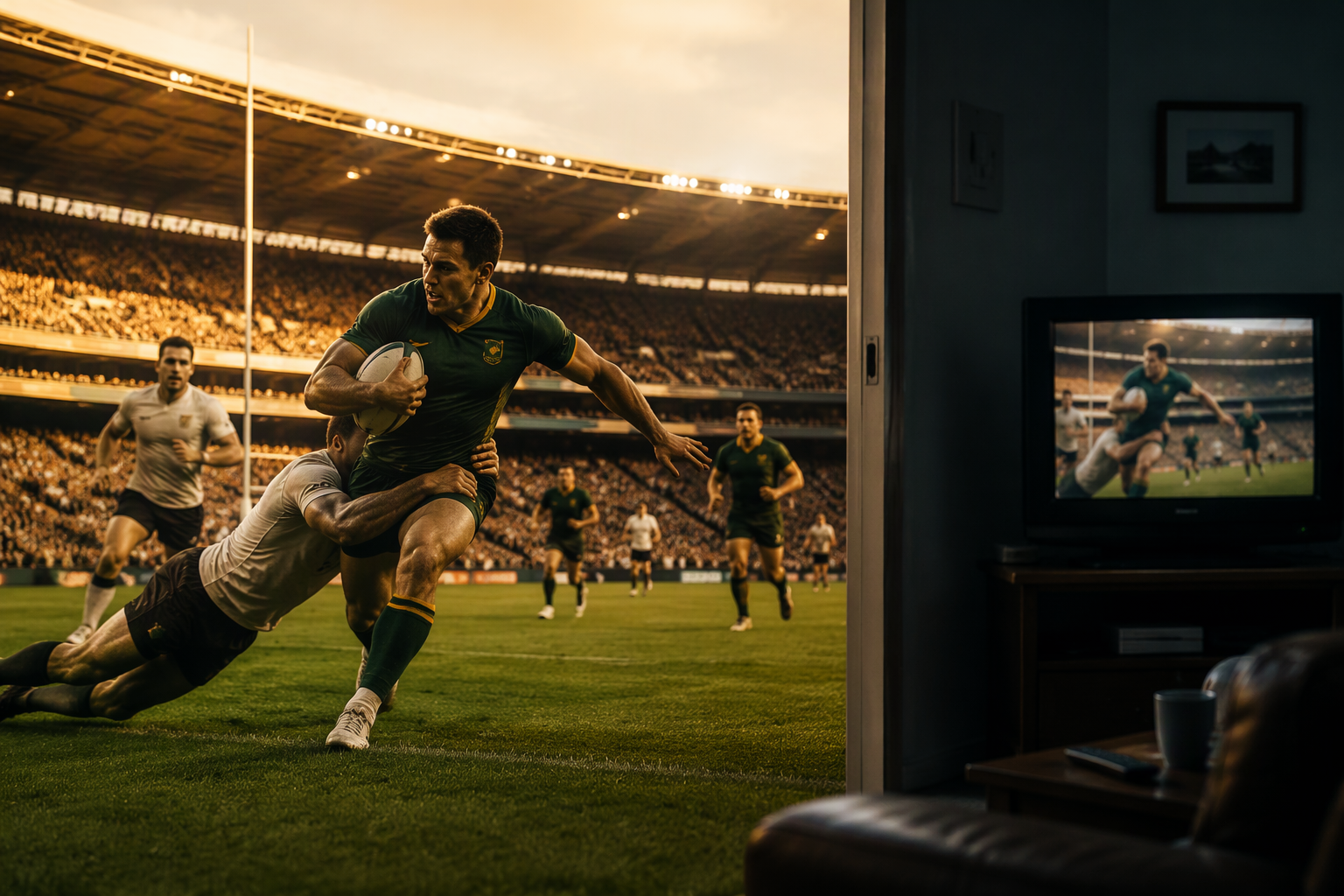
That stark contrast defines the modern split in the sport. Australia celebrated another dual triumph on the field, but British audiences largely ignored the tournament because nobody put it on regular television.
Also read: Rugby League World Cup: Walsh Stars as Kangaroos Win
The gap matters because the administrators running the game in Australia are about to take direct charge of the English competition. If they cannot fix the broken broadcast situation in the northern hemisphere, the global sport risks shrinking into an isolated regional circuit.
Why the Rugby League World Cup vanished in England
British supporters woke up to an empty television guide on the biggest weekend of the tournament. The BBC decided against buying the rights, leaving the international game without its traditional broadcast partner in Britain.
Anyone who wanted to watch the Rugby League World Cup final needed an extra subscription. That came as a harsh blow to fans who already pay Sky Sports for Super League fixtures, with DAZN joining as an additional rights holder in 2027.
England did not help ticket sales or viewing figures after both the men and women suffered early exits. Meanwhile, British viewers enjoyed free coverage of international rugby union and England playing football in Spain on rival channels. League slipped out of the national conversation without a whisper.
Packed crowds and Pacific pride down under
Events looked entirely different south of the equator. Free-to-air television coverage across Australia pulled the event into the mainstream, creating noisy debates and strong ratings throughout the knockout stages.
Australia maintained their historic grip on the silverware by winning both the men’s and women’s competitions. The Kangaroos have now lifted the men’s trophy in 10 of the past 11 tournaments.
Even with familiar champions, the genuine spark came from the Pacific nations. Samoa and Tonga drew passionate, bumper crowds that generated healthy profits and proved that international rugby league holds massive commercial appeal when treated with respect.
Without competitive opponents from Europe, however, the competition increasingly resembled an expanded version of the Pacific Championships. Developing teams in Papua New Guinea, Samoa, and Tonga demonstrated real quality, but the northern nations fell well behind the pace.
Peter V’landys and the northern takeover
A major rescue plan is now moving forward off the field. Super League clubs and the NRL will sign a formal partnership agreement this week to reshape the sport across both hemispheres.
The deal hands clear control of British rugby league to Peter V’landys, who serves as chair and chief executive of the Australian Rugby League Commission. His first task in England will be confronting skeptical television executives who walked away from the sport.
Convincing commercial networks to spend money on British league will test the new leadership immediately. V’landys proved in Sydney that high-grade presentation attracts casual fans, but he inherits an English market where the national team struggled to make an impact.
How the 2030 Rugby League World Cup plans to expand
Planning for the future now shifts toward North America. The next men’s and women’s tournaments will head to the United States in 2030, targeting major Pasifika communities in states such as Utah and Hawaii.
American expansion offers fresh energy, but administrators know they cannot rely solely on Pacific heritage players to carry the event. The Rugby League World Cup desperately needs competitive challengers from England and France to make the 2030 tournament feel truly global.
Fresh investment from Australia will soon reach European clubs, yet money alone will not solve the talent deficit. The immediate test arrives this week when officials in Sydney and London sign the contracts that decide who guides the international game into its next era.
Source: Guardian Sport